Mattress Firmness Explained
The Complete Guide to Finding Your Perfect Feel
Soft, medium, firm, plush, ultra-firm – mattress shopping feels like learning a new language. And here's what makes it even more confusing: one brand's "medium" might feel completely different from another's. So how do you figure out what's actually right for your body? After helping hundreds of customers find their perfect mattress at Blessed Beds, I've developed a simple system that takes the guesswork out of firmness. Let me show you how it works.
Why Mattress Firmness Is So Confusing
Here's a dirty little secret the mattress industry doesn't advertise: there's no universal firmness standard.
When you buy a shirt, "medium" means roughly the same thing whether you're at Target or Nordstrom. But when you're buying a mattress? One brand's "medium" might feel like another brand's "firm." A "plush" from Company A could feel nothing like a "plush" from Company B.
It's like everyone's speaking the same language but using different dictionaries.
I've had customers come in saying, "I need a firm mattress – my last one was way too soft." Then they lie down on what we'd call medium-firm and say, "This is perfect!" Their old mattress wasn't necessarily soft; it just wasn't right for them.
So let's throw out the confusing labels and talk about what actually matters.
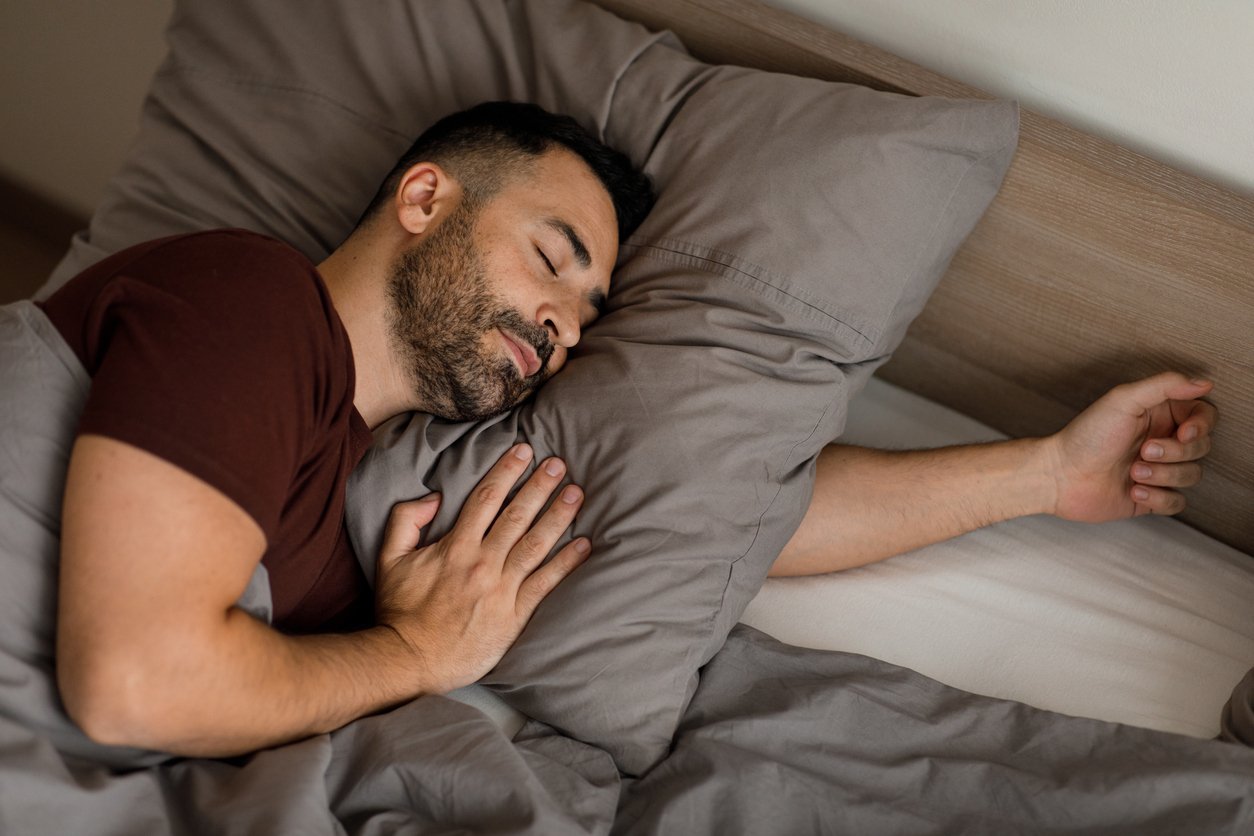
The Simple Truth: Your Sleep Position Changes Everything
If you remember nothing else from this post, remember this: your sleep position matters more than any firmness label ever will.
Why? Because firmness isn't about how the mattress feels to your hand when you press on it. It's about how it supports your spine while you sleep – and that depends entirely on how your body makes contact with the bed.
Think about it this way:
Back sleepers have their weight distributed pretty evenly. They need enough firmness to keep their spine from sagging into a hammock shape.
Side sleepers put concentrated pressure on two points: their shoulders and hips. They need enough give in those areas to prevent waking up feeling like they slept on concrete.
Stomach sleepers need to keep their hips from sinking too deep, which would arch their lower back into an uncomfortable curve.
Different positions. Different needs. Same person.
The mattress that's perfect for your back-sleeping spouse might be torture for you as a side sleeper – even if you weigh exactly the same.
Firmness by Sleep Position: A Practical Guide
Let me break this down into something you can actually use:
Side Sleepers: Embrace the Soft-to-Medium Range
When you sleep on your side, your shoulders and hips bear most of your body weight. A mattress that's too firm will push back against those pressure points, cutting off circulation and leaving you with that "dead arm" feeling – or waking up with hip pain you didn't have before.
Side sleepers generally do best with soft to medium mattresses that cushion the shoulders and hips while still supporting the waist.
At Blessed Beds, I often point side sleepers toward our Nectar memory foam options or the Simmons BeautyRest Harmony Lux for that pressure-relieving hug without sacrificing support.
Back Sleepers: The Medium-Firm Sweet Spot
Back sleeping is the easiest position to shop for because your weight is distributed evenly. The goal is keeping your spine in its natural alignment – a gentle S-curve, not a banana shape.
Medium-firm to firm usually works best. You want support under your lower back without feeling like you're sleeping on a board.
Our Saatva Classic and Sealy Posturepedic Hybrid mattresses are popular with back sleepers for exactly this reason – supportive enough to maintain alignment, but enough cushion on top that you don't feel like you're camping.
Stomach Sleepers: Firmer Is Usually Better
I'll be honest: stomach sleeping isn't great for your spine. But I also know you can't always change how you sleep. If you're committed to stomach sleeping, you need a firmer mattress to keep your hips from sinking and putting strain on your lower back.
The Stearns & Foster Reserve and Chattam & Wells Pierrefonds (on the firmer side of luxury) can work well for stomach sleepers who need that extra support.
Combination Sleepers: Look for Responsiveness
Do you fall asleep on your side, wake up on your back, and somehow end up on your stomach by morning? Welcome to the combination sleeper club.
You need a mattress that works reasonably well in multiple positions. That usually means medium firmness with good responsiveness – a mattress that adapts as you move rather than trapping you in one position.
Hybrid mattresses (memory foam or latex on top, coils underneath) tend to work well here. The Serta iSeries Hybrid and Stearns & Foster Lakeridge are combination sleeper favorites at Blessed Beds.
The Body Weight Factor
Sleep position is the biggest factor, but body weight matters too. Here's the simple version:
The more you weigh, the more you'll sink into any mattress.
A mattress that feels medium-firm to someone who weighs 140 pounds might feel medium-soft to someone who weighs 220 pounds. You're compressing the materials more, so you sink deeper.
This means:
Lighter sleepers (under 150 lbs) often need slightly softer mattresses than average recommendations suggest – otherwise, they won't sink in enough to get pressure relief.
Heavier sleepers (over 200 lbs) often need slightly firmer mattresses than average to avoid that "sinking in too deep" feeling and to ensure long-term durability.
The "perfect" firmness is personal. What works for your neighbor might not work for you, even if you both say you like "firm" mattresses.
The Goldilocks Test: How to Know When It's Right
You've probably heard the story of Goldilocks and the three bears – one bed too hard, one too soft, one just right.
Here's how to run your own Goldilocks test:
Lie down in your usual sleep position for at least five minutes. (Yes, really. You can't judge a mattress in thirty seconds.) Then ask yourself:
Is my spine straight? For side sleepers, imagine someone looking at your spine from behind – it should be a straight line, not curved like a banana. For back sleepers, there should be a small gap at your lower back, not a sagging feeling.
Do I feel pressure anywhere? Pay attention to your shoulders, hips, and lower back. Any feeling of "pushing back" that seems like it would get uncomfortable after a few hours is a red flag.
Can I relax completely? If you're tensing muscles to stay comfortable, the mattress isn't doing its job.
Here's my favorite way to explain it to customers: You should feel like the mattress is holding you up, not like you're fighting to stay on top of it or sinking into a hole.
Why You Really Need to Try Before You Buy
I know online mattress shopping is convenient. And those 100-night trials sound risk-free. But here's what I've seen play out dozens of times:
Someone orders a mattress online based on reviews from strangers with different bodies, different sleep positions, and different preferences. The mattress shows up. It's fine. It's not bad. But it's not great either. And "fine" becomes the enemy of "great" because who wants to deal with returning a mattress?
So they keep it. And they spend the next seven years sleeping on a mattress that's just okay.
Your body knows what it needs. But it can't tell you through a website. It needs to actually lie down, in your actual sleep position, on an actual mattress.
That's why I do what I do at Blessed Beds. When you come in, you don't get a sales pitch – you get time to actually feel the difference between a medium Sealy and a medium-firm Stearns & Foster. You get to discover what "supportive but not too firm" means for your body.
And you might be surprised. I've had customers walk in certain they needed firm, only to discover their best sleep comes from a medium. The body doesn't lie.
Ready to Find Your Perfect Feel?
Mattress firmness doesn't have to be complicated. Start with your sleep position, factor in your body weight, and then trust what your body tells you when you actually lie down.
If you're in the Columbus, Mississippi area and you want help sorting through the options, I'd love to help. At Blessed Beds, we carry premium name-brand mattresses at discount prices, and I'll give you all the time you need to find your perfect fit – no pressure, no rush.
Give us a call or text at 662-574-7737 to schedule a time to come in. Bring your questions, bring your skepticism, and bring your usual sleep position. We'll figure this out together.